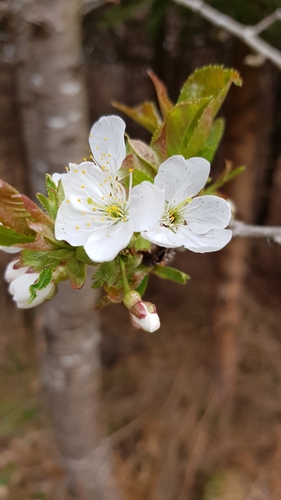
wild cherry
Prunus avium
A vigorous deciduous tree valued for its white spring blossoms and dark red to black cherries that attract wildlife. It develops attractive dark bark and golden fall color.
Overview
- Form
- Growth Rate
- Size
- Dormancy
Tolerances & Soil
USDA Hardiness Zone
Seasonality
Bloom Season
Harvest Season
Season of Interest
Forest Layer Placement
Canopy
The tallest trees that form the overstory.
Succession Role
Native Range
Europe and western Asia
Function & Care
Functional Roles
Edible Parts
Establishment & Care
- Establishment
- Maintenance
- Years to Bearing
- Propagation
Companion Planting
Plants well with
2Malus floribunda
Co-flowering wild cherry and crabapple ensure cross-pollination for both species. Their flowering sequences support diverse beneficial insect populations.
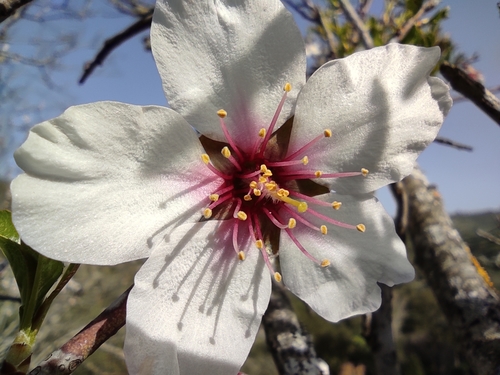
Prunus dulcis
Almond and wild cherry produce flowers at overlapping times, attracting diverse pollinator populations that benefit both species. They are compatible Prunus relatives.
Notable Cultivars
'Bing' and 'Rainier' are among the most commercially popular, prized for large, sweet fruit and reliable production. 'Stella' is a self-fertile cultivar that simplifies home growing by not requiring a separate pollinator tree.