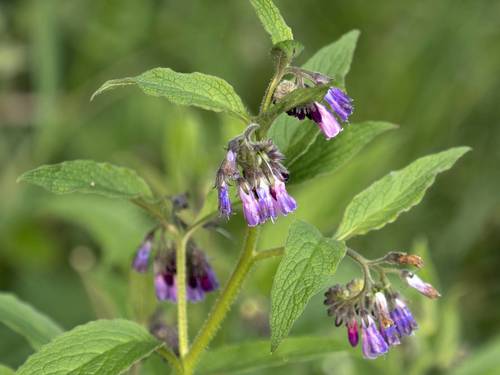
common comfrey
Symphytum officinale
Common comfrey is a vigorous perennial herb with large, hairy leaves and bell-shaped flowers ranging from white to purple. Traditionally used in herbal medicine and valued by gardeners for its deep taproot that brings nutrients to shallow soils.
Overview
- Form
- Growth Rate
- Size
- Dormancy
Tolerances & Soil
USDA Hardiness Zone
Seasonality
Bloom Season
Harvest Season
Season of Interest
Forest Layer Placement
Herb
Soft non-woody plants of the field layer.
Succession Role
Native Range
Europe and western Asia
Function & Care
Functional Roles
Edible Parts
Establishment & Care
- Establishment
- Maintenance
- Propagation
Companion Planting
Plants well with
9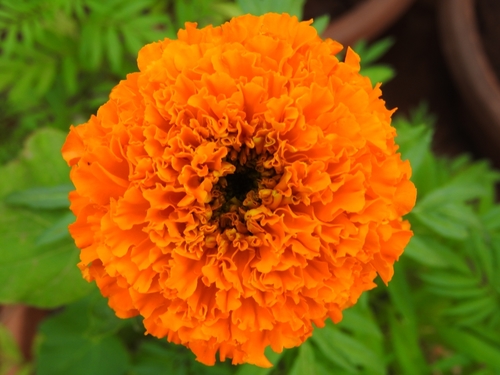
Tagetes erecta
Tagetes produces alpha-terthienyl, a nematicidal compound that suppresses soil nematode populations, protecting root systems of nearby perennial plants including comfrey.
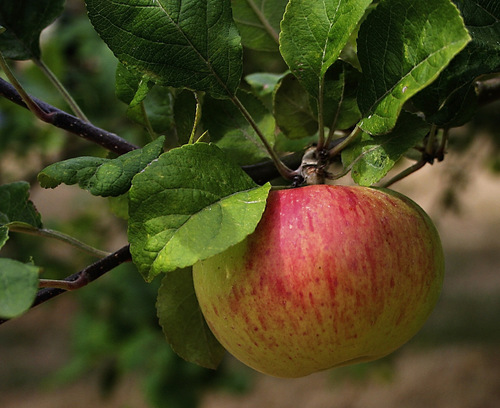
Malus domestica
Comfrey's deep taproot mines subsoil potassium, calcium, and phosphorus; the cut-and-drop leaves create a nutrient-rich mulch that feeds shallow-rooted apple tree feeder roots.
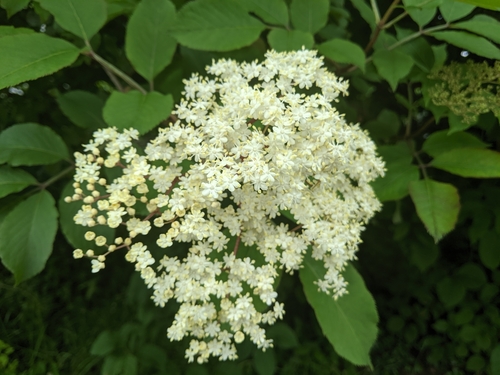
Sambucus nigra
Elderberry and comfrey are a classic forest garden understory pair; elderberry fixes and accumulates nutrients via leaf litter while comfrey's tap root circulates them from subsoil.