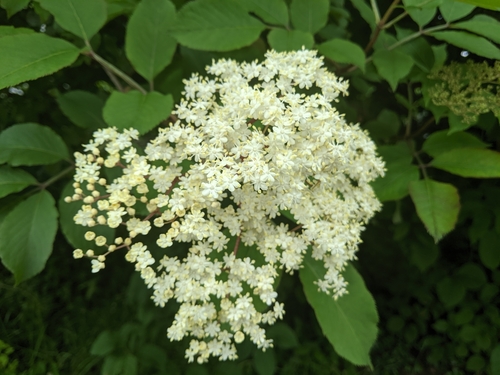
European black elderberry
Sambucus nigra
A vigorous deciduous shrub producing creamy-white flower clusters in late spring followed by dark purple-black berries in late summer, valued for culinary and medicinal uses. Attracts birds and wildlife while offering ornamental interest throughout the growing season.
Overview
- Form
- Growth Rate
- Size
- Dormancy
Tolerances & Soil
Drought Tolerance
Flood Tolerance
USDA Hardiness Zone
pH Range
Soil Texture
Seasonality
Bloom Season
Harvest Season
Season of Interest
Forest Layer Placement
Shrub
Woody multi-stem plants at eye level.
Succession Role
Native Range
Europe, Western Asia, North Africa
Function & Care
Functional Roles
Edible Parts
Establishment & Care
- Establishment
- Maintenance
- Years to Bearing
- Propagation
Companion Planting
Plants well with
2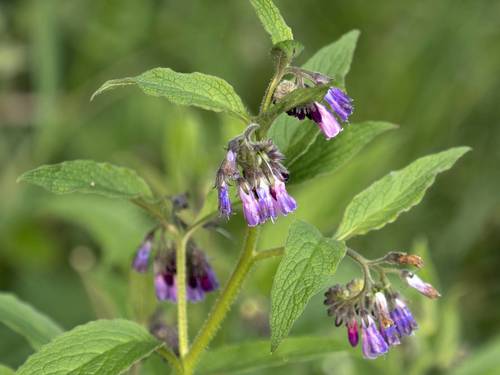
Symphytum officinale
Elderberry and comfrey are a classic forest garden understory pair; elderberry fixes and accumulates nutrients via leaf litter while comfrey's tap root circulates them from subsoil.
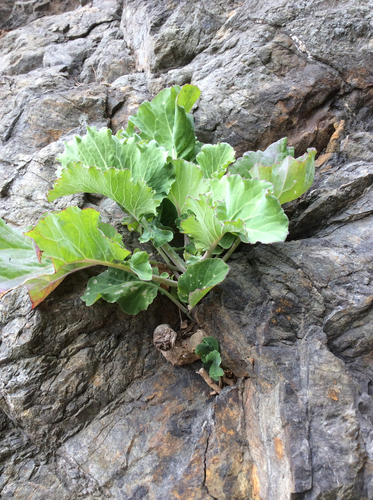
Brassica oleracea
Elderberry attracts beneficial predatory insects and pollinators while its height provides windbreak and shade moderation for brassicas in hot climates.