American chestnut
Castanea dentata
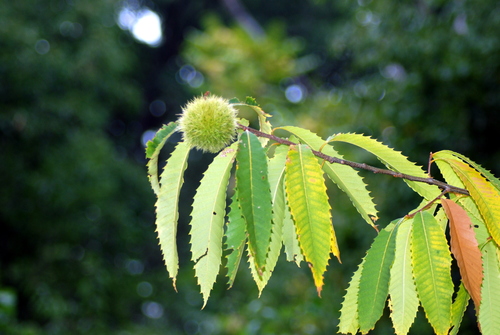
A large deciduous tree native to eastern North America, prized for its edible nuts and attractive foliage, though now critically endangered due to chestnut blight disease. Historically an important timber and mast tree, it produces fragrant catkins in early summer followed by spiky burrs containing nuts.
Overview
- Form
- Growth Rate
- Size
- Dormancy
Tolerances & Soil
Drought Tolerance
USDA Hardiness Zone
pH Range
Soil Texture
Seasonality
Bloom Season
Harvest Season
Season of Interest
Forest Layer Placement
Succession Role
Native to the United States
Native Range
Eastern North America
Native to: Maine, New Hampshire, Vermont, Massachusetts, Rhode Island, Connecticut, New York, New Jersey, Pennsylvania, Delaware, Maryland, Virginia, West Virginia, Ohio, Indiana, Illinois, Michigan, Kentucky, Tennessee, North Carolina, South Carolina, Georgia, Alabama
Function & Care
Functional Roles
Edible Parts
Establishment & Care
- Establishment
- Maintenance
- Years to Bearing
- Propagation